



On one level, the world’s response to the coronavirus pandemic over the past two and a half years has been a major triumph for modern medicine.
We have developed a vaccine for COVID-19 faster than any vaccine in history and started using it just one year after the virus first infected humans. The vaccines turned out to be more effective than top public health officials had dared hope. Combined with antiviral treatment, they have dramatically reduced the number of severe illnesses and deaths caused by the virus and helped hundreds of millions of Americans return to their pre-pandemic lives.
Yet on another level, the pandemic has demonstrated the inadequacy of such pharmacological interventions. In the time it took for the vaccine to arrive, more than 300,000 people died from CO VID in the United States alone. Even since then, declining immunity and the semi-regular appearance of new variants have unnerved detente. During that time, 700,000 Americans died despite the availability of vaccines and antiviral drugs.
 For some epidemic prevention experts, the takeaway here is that pharmacological interventions alone will not solve the problem. Although injections and drugs may be necessary to ease the onslaught of the virus, they are reactive in nature, not prophylactic. Some experts say that to protect against future pandemics, we should focus on attacking the virus where it is most vulnerable, even before drug interventions are necessary. Specifically, they argue, we should pay attention to the air we breathe. “We’ve dealt with a lot of variants in the past, we’ve dealt with a lot of strains, we’ve dealt with other respiratory pathogens,” Abraar Karan, an infectious disease doctor and global health expert at Stanford, told me. “The only thing that hasn’t changed is the transmission route.” The worst epidemics are airborne.
Many overlapping efforts are underway to avoid future outbreaks by improving air quality. Many scientists have long advocated overhauling the way we ventilate indoors, which has the potential to change our air just as the advent of sewer systems changed our water. Some researchers are equally enthusiastic about the promise of bactericidal lighting. However, renovating a country’s buildings with excellent ventilation systems or germicidal lighting can be a long-term task that requires large-scale institutional purchases and possibly a considerable amount of government funding. Meanwhile, a more niche group has focused on something simpler, at least in theory: designing the perfect mask.
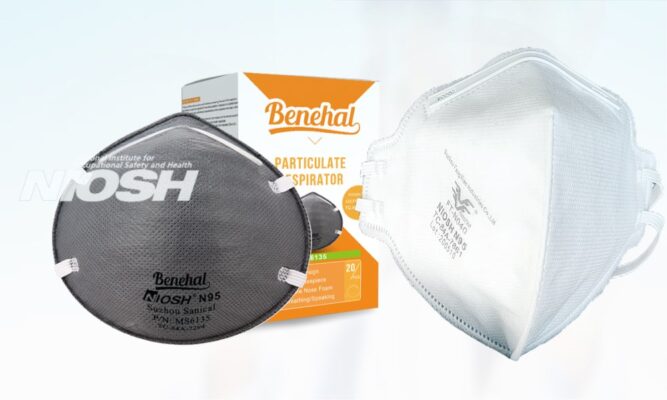
Two and a half years into the pandemic, it’s hard to believe that the masks that are widely available to us today are almost identical to those that were available to us in January 2020. For the average person, n95’s are the gold standard and work pretty well: they filter out at least 95 percent of 0.3-micron particles (i.e., n95) and are often the masks of choice in hospitals. However, anyone who has worn masks in the past two and a half years will know that, although we are lucky to have them, they are not the most comfortable. At some point, they’ll start to hurt your ears, nose, or entire face. When you finally take off your mask after a long flight, chances are you’ll look like a raccoon. Most existing N95 masks are not reusable, and although each mask is inexpensive, the cost increases over time. They impede communication, making it impossible to see the wearer’s facial expressions or read their lips. Because they need to be tested for fitness, the average wearer is likely to be far less effective than the 95% advertised. In 2009, the federal government released a report with 28 recommendations for improving masks for health care workers. Few seem to have been taken.